(1).png)
 1 month ago
19
1 month ago
19
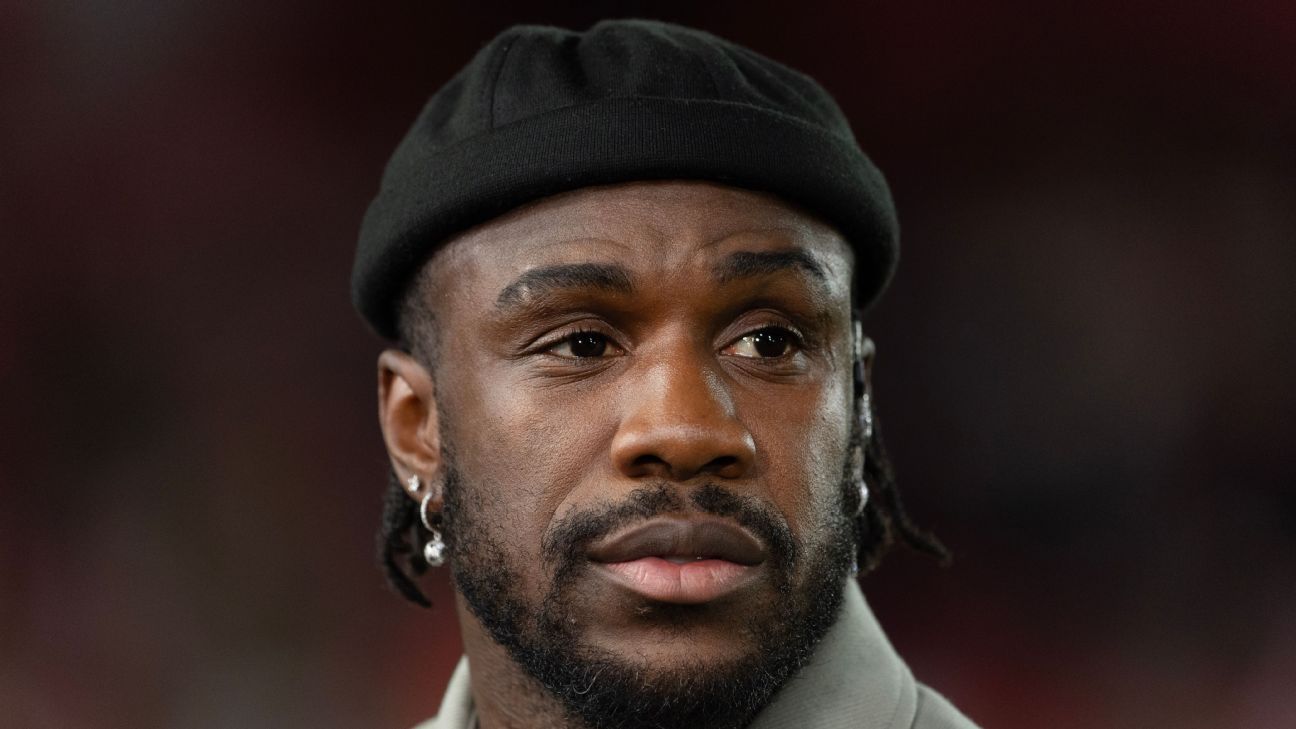
The aptly named 'Vomit Rocket' lived up to its grizzly reputation as TikTok trainspotting sensation Francis Bourgeois took on a zero–gravity training flight.
The social–media star, famous for his enthusiastic reactions to trains, undertook the challenge as part of a new Channel 4 documentary, 'Mission to Space with Francis Bourgeois'.
While Mr Bourgeois said it has always been his dream to become an astronaut, the reality of spaceflight training might have proved a little too intense.
During a microgravity training session, the TikTok trainspotter ended up covered in his own floating vomit.
At first, Mr Bourgeois drifted and spun through the air in the simulated microgravity, even taking the chance to show off some impressive acrobatics.
But as the Vomit Comet continued its relentless flight, the TikToker worriedly told the crew: 'Hang on, I'm feeling a bit sick. I need a bag.'
Before long, Mr Bourgeois was violently throwing up into a paper sickbag as the zero–gravity flight continued to spin him around the cabin.
Reflecting on his experience after landing, he said: 'It was one of the most amazing experiences of my life, and it quickly became the most horrendous experience of my life.'
The so–called Vomit Rocket has lived up to its grizzly reputation as TikTok trainspotter Francis Bourgeois threw up over himself during a zero–gravity training flight
Reflecting on his experience, Mr Bourgeois said: 'It was one of the most amazing experiences of my life, and it quickly became the most horrendous experience of my life'
The so–called Vomit Rocket is a modified aircraft that climbs and dives in a steep 'parabolic' arc.
The plane first climbs at a steep 45–degree angle to an altitude of around 7,500 metres, creating a pull 1.8 times stronger than gravity on Earth.
The pilot then cuts back the engines and allows the plane to drift upwards so that everything inside the aircraft, including the passengers, falls at the same acceleration as Earth's gravity.
Because the aircraft is falling at the same rate as the passengers, there is no force pushing against them, creating the same weightless conditions as space.
The plane then pulls out of the dive, creating another brief period of extra–strong gravity, before repeating the cycle as many as 20 times in a row.
This technique was originally developed by NASA to simulate the effects of microgravity and see how astronauts could handle life in space.
However, one unfortunate side effect of sudden, artificially–induced weightlessness is that some people experience violent motion sickness – hence the name 'Vomit Rocket'.
While not everybody is affected, Mr Bourgeois unfortunately discovered that he is one of those people whose stomachs simply cannot handle zero gravity.
The TikTok star undertook this gruelling challenge as part of a new Channel 4 documentary series, Mission to Space with Francis Bourgeois
How do astronauts train for zero gravity?
To train for zero–gravity, astronauts go through 'parabolic flights'.
These use planes that climb and dive in a steep arc to briefly simulate the weightlessness of space.
As the plane climbs, the passengers feel a pull 1.8 times stronger than gravity due to acceleration.
The pilot then slows the engines so that the plane enters freefall, accelerating at the same rate as gravity.
This allows passengers to experience weightlessness for about 30 seconds before the plane pulls out of the dive.
He said: 'There was a side of me that wanted this to be a very macho demonstration of my bravery, but it ends up being quite the opposite, really.'
In this new documentary, the trainspotter attempts to pursue his childhood dream of becoming an astronaut.
His journey begins by undertaking gruelling G–force training in the UK under the guidance of British astronaut Tim Peake.
'I asked Tim at the beginning about being a tall astronaut because I was worried about my postural hypertension: sometimes, when I stand up quickly, I feel dizzy or even pass out,' says Mr Bourgeois.
'So my ability to withstand G–force in the Z–axis was definitely a concern.'
To continue his training, the would–be astronaut then travelled to the US to pursue a place on Axiom Space's astronaut training programme.
There, he endured oxygen starvation in a hypobaric chamber, faced isolation training meant to simulate the loneliness of the moon, and tackled simulated astronaut emergencies.
And, of course, took his ill–fated flight aboard the vomit rocket for zero gravity training.
The so–called Vomit Rocket is a specialised plane that can simulate zero gravity. It is used by space agencies to prepare astronauts for the weightlessness of space, but often causes intense nausea. Pictured JAXA astronauts train in a zero–gravity flight
Francis Bourgeois undertakes training to try and secure a place on Axiom Space's astronaut training programme, but the challenge proves greater than he had expected
Mr Bourgeois said: 'There was a lot that I didn't really anticipate.
'Being in the hyperbaric chamber brought back old feelings of claustrophobia. I got swept out to sea for a moment when I was younger and had difficulty with confined spaces afterwards.
'It sounds weird, but the experience has helped me to understand not so much my desire to get out into space and the new age, as exciting as it was to witness, but more how special it is to be on Earth and how much we need to cherish what we have.'
Mission to Space with Francis Bourgeois airs Sun 25 Jan and Sun 1 Feb at 18:50 on Channel 4.
HOW DO ASTRONAUTS DRINK IN SPACE?
Astronauts don't usually allow liquids to float around the space station to prevent any damage to delicate equipment.
Instead they have specially adapted tubes that allow them to drink without the liquid floating around.
Astronauts aboard the ISS drink water that comes from the ambient cabin's humidity, which is eventually condensed and returned to the water supply.
The water is filtered from recycled shower water, astronaut sweat and urine.