(1).png)
 1 month ago
5
1 month ago
5
- Dr Tlaleng Mofokeng grew up during apartheid in QwaQwa and is now the UN Special Rapporteur on the Right to Health – the first woman and first African to hold this position.
- She’s a women’s rights and sexual/reproductive health activist who uses her platform to advance health justice for marginalised communities globally.
- In January 2025, she was fined by the Health Professions Council of SA for posting ‘F*** you, Netanyahu’ on X regarding delays in the Gaza ceasefire, though she says she doesn’t regret it.
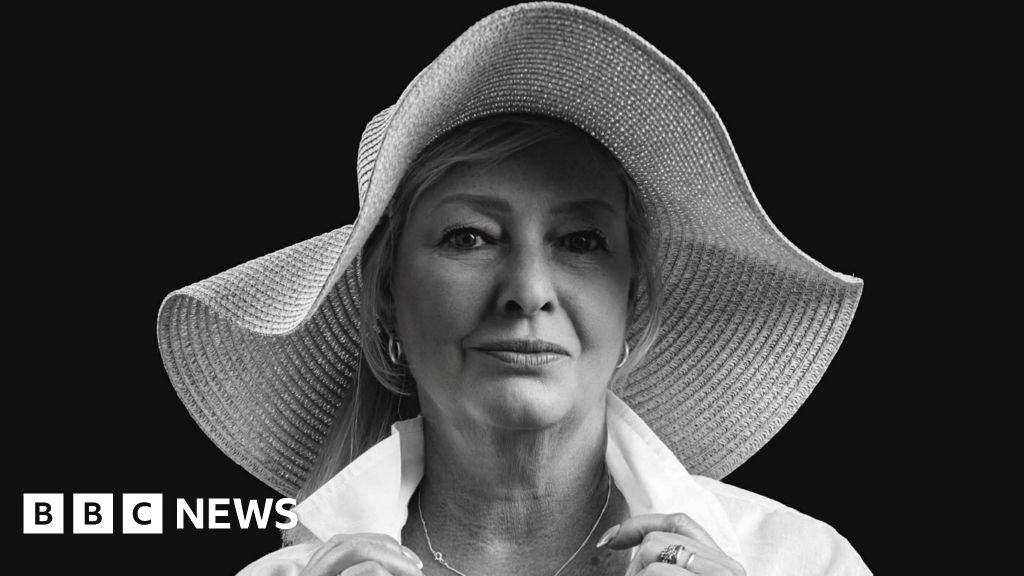
From the dusty roads of QwaQwa to the global podiums of the UN, Tlaleng Mofokeng – known simply as Dr T – has carved a path for herself anchored in justice, compassion and purpose.
Her titles – medical doctor, women’s rights activist, sexual and reproductive health activist and UN Special Rapporteur on the Right to Health – are worn as badges of responsibility rather than accolades, while her origins remain her anchor.
South Africa is where I am rooted. It’s where my story still resonates.
Tlaleng Mofokeng
Her position at the UN has required extensive global travel. When we met, she had just returned from Geneva, Switzerland.
Dressed in a bright, floral pink dress that perfectly matched her vibrant personality, the bold doctor graciously opened her Parkmore offices to City Press.
Though still recovering from the flu, her presence radiated warmth.
Copies of her book, Dr T: A Guide to Sexual Health and Pleasure, are proudly displayed.
“It took nine months to write the book. It is my baby,” she says with a smile.
READ: Abortion is healthcare
Her writing process reveals her character: adaptive, resourceful, always maximising every moment. She turned travel time into productive sessions.
“No matter where I went, I was able to use time spent in e-hailing services to write,” she explains.
“When at the airport waiting for flights in the lounge, I would write,” she explains.
The making of an activist
In the 1980s, in Phuthaditjhaba (QwaQwa) – then a Bantustan i the Free State – Mofokeng’s childhood was shaped by military presence that defined daily life.
WATCH | WINNING WOMEN: Addiction scarred her home – now she leads the war on gambling
“It was an interesting decade to have been a child and grow up in South Africa,” says the 43-year-old.
One memory remains particularly vivid.
I remember seeing a helicopter with a blue logo dropping dental kits in the school yard. I was probably in Grade 6 or 7. I remember thinking, ‘Who are these people dropping dental kits from the sky?’ As children, what danger are we to them?
Tlaleng Mofokeng
That scene at Mamello Primary School, watching dust lift as the kits poured from the sky, became a core memory.
WATCH | Unpacking obstetric violence in SA’s public health facilities
Although as a child she “could not fully comprehend what that meant”, she had “a gut feeling about how odd that looked”.
It demonstrates so much of how the work I do has become ... politically rooted.
Tlaleng Mofokeng
This early political awareness would be crystallised years later in medical school, where she learnt “through medical anthropology and history” about apartheid’s devastating impact on healthcare.
The apartheid system was not just about economical stealing and depletion of resources of our country. The system also operated through healthcare, and as a country, we have never fully quantified the harm it caused to our health systems.
Tlaleng Mofokeng
Childhood joy amid struggle
Despite harsh realities, Mofokeng’s childhood had moments of “pure joy” – joy so profound she carries it on her skin. She has a tattoo of herself at age five, commemorating what she calls “a joyous moment for me, something that was a very deep memory of what joy is”.

Tlaleng Mofokeng shows her tattoo of herself at age five. Despite harsh childhood realities, she says there were moments of ‘pure joy’ so profound she carries them on her skin as a permanent reminder.
The memory centres on a birthday party at her primary school.
“My mom had brought a [tree-tier] cake with the top for teachers, middle for me and school friends, and bottom for myself and outside school friends. But I said to her, ‘You cannot just bring one tier and leave the other at the principal’s office.’ I told her I wanted her to bring the whole thing. I wanted all the tiers,” she laughs.
Clearly, dramatic me was alive at five years old. I am grateful I had a mom who was able to play along and make my wild demands come to life.
Tlaleng Mofokeng
Another tradition Mofokeng treasured was the annual Christmas celebrations on her street.
“Parents and older people would put money together for this Christmas end-of-year celebration,” she recalls.
“We used to have fake weddings as children, and I was always the bride.”
WATCH | WINNING WOMEN | Amanda Blankfield-Koseff: Building a movement of empowered youngsters
These celebrations, she now understands, were “something protective that parents did, just to ensure we don’t just see dust, helicopters and Nyalas [armoured police vehicles]. It allowed us to be children and to just play.”
A calling born from compassion
Her path towards medicine emerged early.
Ten-year-old Tlaleng wanted to be a doctor.
Tlaleng Mofokeng
As a Catholic child, spending holidays at a convent, running an old age home, she had two choices.
I could either attend the stations of the cross – a popular Catholic devotion during Lent – or I could be smart and do what I really wanted to do, which was counting pills for the elderly and making sure they took them. I found taking care of and just being with the elderly so rewarding.
She also spent time “bonding and cooking with nuns, learning to bake and make the actual sacrament”.
“I genuinely enjoyed older people’s company.”
I think being a doctor partly also came from that experience of seeing and spending time with the elderly.
Tlaleng Mofokeng
When people were injured during riots, “the community would always know to come to our house because ‘Tlaleng has a first aid kit’.”
Even at the age of 10, she was drawn to “aisles of medical supplies” when shopping with her mother.
“I loved being able to participate in my community that way. Helping that way,” Mofokeng says as she reflects on how these early acts shaped her purpose.
“Teachers would think I was boring because, year after year, when asked what we wanted to become, my answer never changed – it was always, doctor.”
The mother who made it all possible
Central to Mofokeng’s story is her mother, Agnes or “Aus Aggie”, as she affectionately calls her.
“We have always had an open relationship. From when I was young, we would talk about boys, life, sex and anything else. It was never awkward,” she recalls.
I’ve always interacted with my mom as a woman, not just as my mom.
Tlaleng Mofokeng
Agnes was a young teacher for deaf and blind children, facing community judgment.
“Families would say, ‘Your child will not speak,’ because she spends time with mute people,” Mofokeng shares, adding that her mother didn’t care, taking her daughter to work anyway, exposing her to sign language.
“Maybe now that’s why I can’t stop talking,” she laughs, adding, “I tell that story to show how groundbreaking my mother was in her own space.”
Global impact and local roots
Today, as UN Special Rapporteur on the right of everyone to the highest attainable standard of physical and mental health, Mofokeng brings her South African perspective to global challenges.
“I am tasked with country visits to do health assessments – to advise countries on what they can do better.”
Appointed during the Covid19 pandemic as “the first woman, first African and medical doctor” in this position, she faced unique challenges. But she approached them with characteristic innovation, using legal tools like amicus curiae briefs to advance health rights in courts worldwide.
“The ability to influence and advance jurisprudence as a person who is not a lawyer has not only been exciting, but also innovative – merging law that benefits people often unable to get justice.”

Tlaleng Mofokeng has risen from the dusty roads of QwaQwa to global podiums, carving a path anchored in justice, compassion and purpose.
The audacity factor
Mofokeng talks about her secret weapon, and she doesn’t hesitate:
One thing about me is that I have always had the audacity for anything, everything at anytime. I am always ready for battle in any arena.
Tlaleng Mofokeng
However, this audacity isn’t ego-driven, she explains.
“I personally detest people who lead with ego, who present themselves ego-first, and I generally try not to do that. But with this role, it was intentional. I centre people who are often marginalised.
“It was less about me and consciously every day, it had to be about the work.”
Despite her public profile, Mofokeng maintains delightful contradictions. She “really loves tattoos, but my mother hates them”.
“I have spent a lot of time in my adult life hiding them from her.” One tattoo reads “be bold” in Braille, paying homage to her mother’s work and foundation.
“It’s something my mother used to say and still says. Every time I go speak at the UN or there’s something important I’m working on,” she explains.
In closing, she proudly says of the work she does: “I am doing exactly what I am supposed to be doing and I am exactly where I am meant to be.”
The controversial X post
In January last year, after Israeli Prime Minister Benjamin Netanyahu announced a brief delay of a ceasefire in Gaza, Mofokeng, serving as the UN Special Rapporteur on the Right to Health, posted: “F** you, Netanyahu.”
READ: Dr Tlaleng Mofokeng, UN special rapporteur, in hot water for swearing at Netanyahu
Asked about this controversial post, Mofokeng told City Press that she could not speak about the issue.
“But I do not regret it,” she says.
Tlaleng was subsequently fined R10 000 by the Health Professions Council of SA.